Google Ads Safety Report 2025 Financial Advertising 2026
What the 2025 Google Safety Report Tells You About Financial Advertising in 2026
The 2025 Google Ads Safety Report claims 99% pre publication interception and 80% reduction in false suspensions. On the surface, enforcement looks better. The numbers buried in the appendices tell a different story:
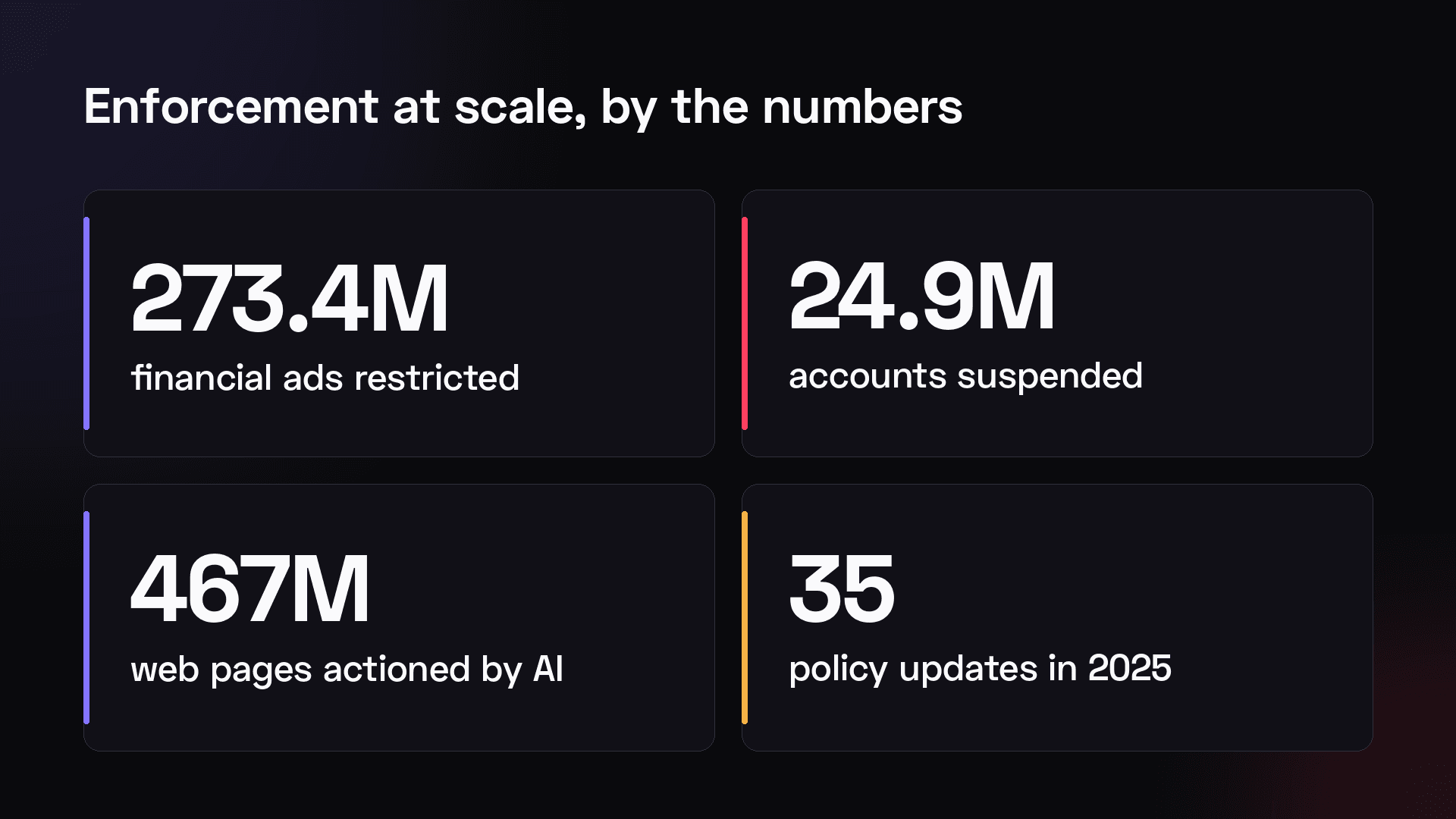
- 273.4 million financial services ads restricted
- 24.9 million advertiser accounts suspended globally
- 467 million web pages actioned by AI (2.6x the 2024 volume)
- 35 policy updates in 12 months
What started as a compliance cost has become a structural cost. It's reshaping how you allocate budget, choose agencies, and build financial advertising operations.
Three Trends That Changed the Cost Structure
1. AI Enforcement Is Scaling 2.6x Year Over Year.
Google actioned 467 million web pages in 2025 for policy violations. That's 2.6 times the ~180 million in 2024. Your ad doesn't enter the review queue. AI screening evaluates it first, often blocks it before any human sees it.
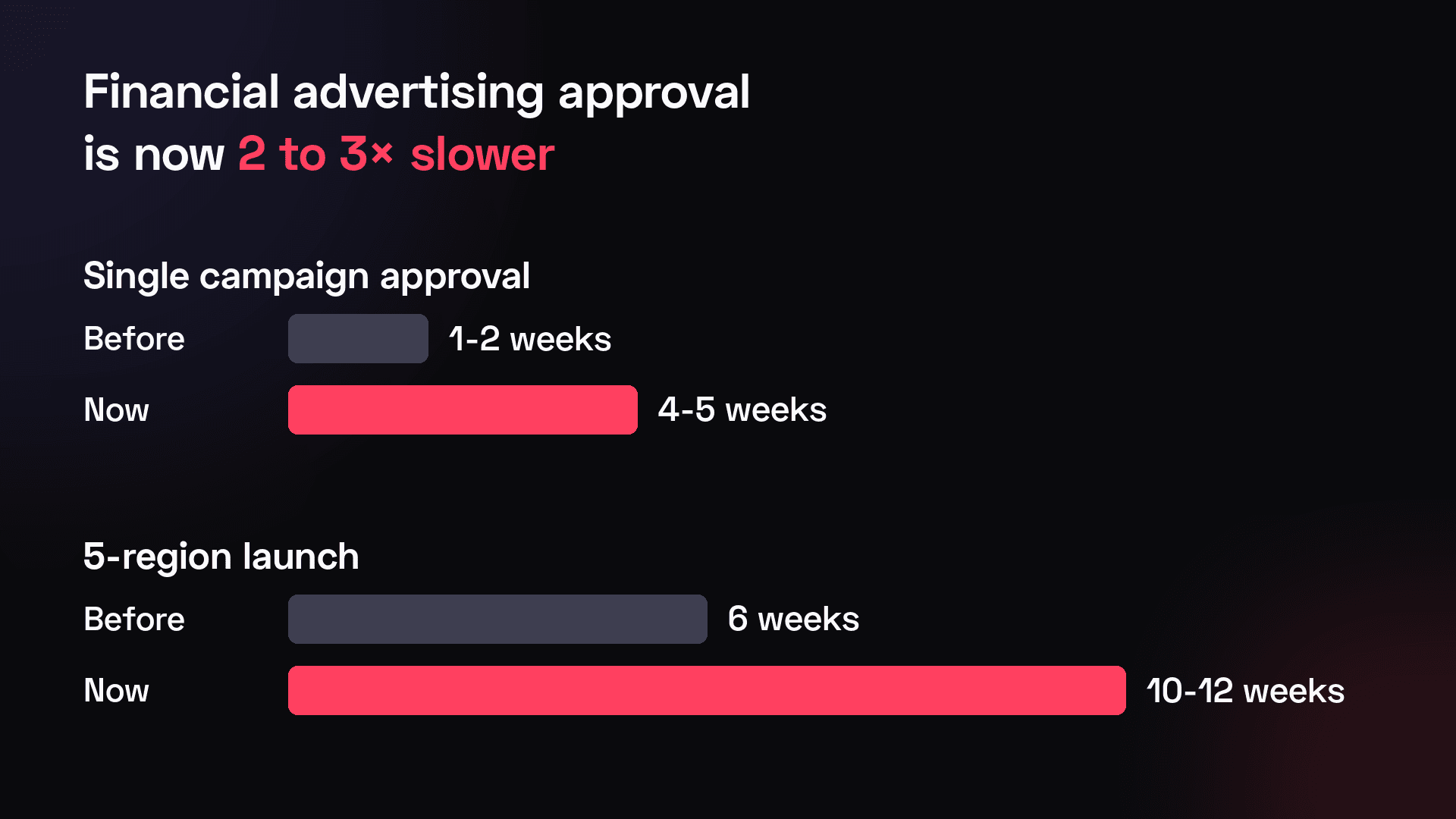
Approval time is no longer 1-2 weeks. It's now 2-4 weeks minimum for financial services because the system routes flagged content to specialist reviewers. The queue is deep. You cannot launch in 2 weeks. You launch in 4-5 weeks, accounting for 2-3 weeks of approval time plus 1-2 weeks for resubmission if flagged. A 5-region launch that used to take 6 weeks now takes 10-12 weeks. Compliance review window is a hard cost now.
2. Verification Drift Is Becoming Mandatory Reconciliation.
Google published 35 policy updates in 2025, roughly one every 10 days, or 2-3 friction points per month. Financial services saw the most. Each update technically requires account re-verification or legal review of certified claims. Google doesn't revoke verification when policies change. You're responsible for catching the change and ensuring your ads still comply.
Compliance is no longer one time setup. It's an ongoing capital expense. You need compliance review on 30-day cycles minimum. Every time Google publishes a policy update (2-3 times per month), someone checks whether it affects you. Most agencies build this into contracts as fixed retainer cost. Teams that don't usually discover non compliance when Google flags an account.
3. Account Enforcement Scales Faster Than Ad Level.
The 24.9 million suspended accounts in 2025 aren't from individual disapproved ads. They're account level flags. Ad level disapproval means Google rejects one creative. Recovery: 1-3 weeks. Account level suspension means all campaigns stop. Budget stops flowing. Recovery: 4-6 weeks minimum, then 6-month appeal window.
What triggers account level flags: identity verification drift (legal name changed but you didn't update Google), MCC contamination (you manage multiple clients and one gets flagged, tainting the whole MCC), payment irregularities, and behavioral signals (repeated resubmission attempts that look like evasion).
A single structural mistake puts entire portfolios at risk. Rebranding without updating verified identity triggers full compliance audit. Lapsed payment method flags the account. For the 8 specific patterns that actually trigger these flags, see our 273M restricted ads breakdown.
What This Means for Budget Allocation and Agency Selection
For CFOs and Heads of Growth: compliance overhead is now variable. Approval time scales with regional expansion. Account suspension risk scales with team size. The larger your team managing financial services budgets, the higher the probability one person makes a structural mistake. ABA Banking Journal data shows 25% of financial institutions expect compliance budgets to grow in 2026, with 82% expecting digital advertising growth. The cost structure is real and shifting now.
With 24.9 million suspensions and stricter account level flagging, risk is material enough to model. A $500K budget across 3 accounts has less risk than the same budget across 15 accounts if they're on the same MCC. For the architectural decisions that prevent this risk at scale, see our compliance first multi region playbook.
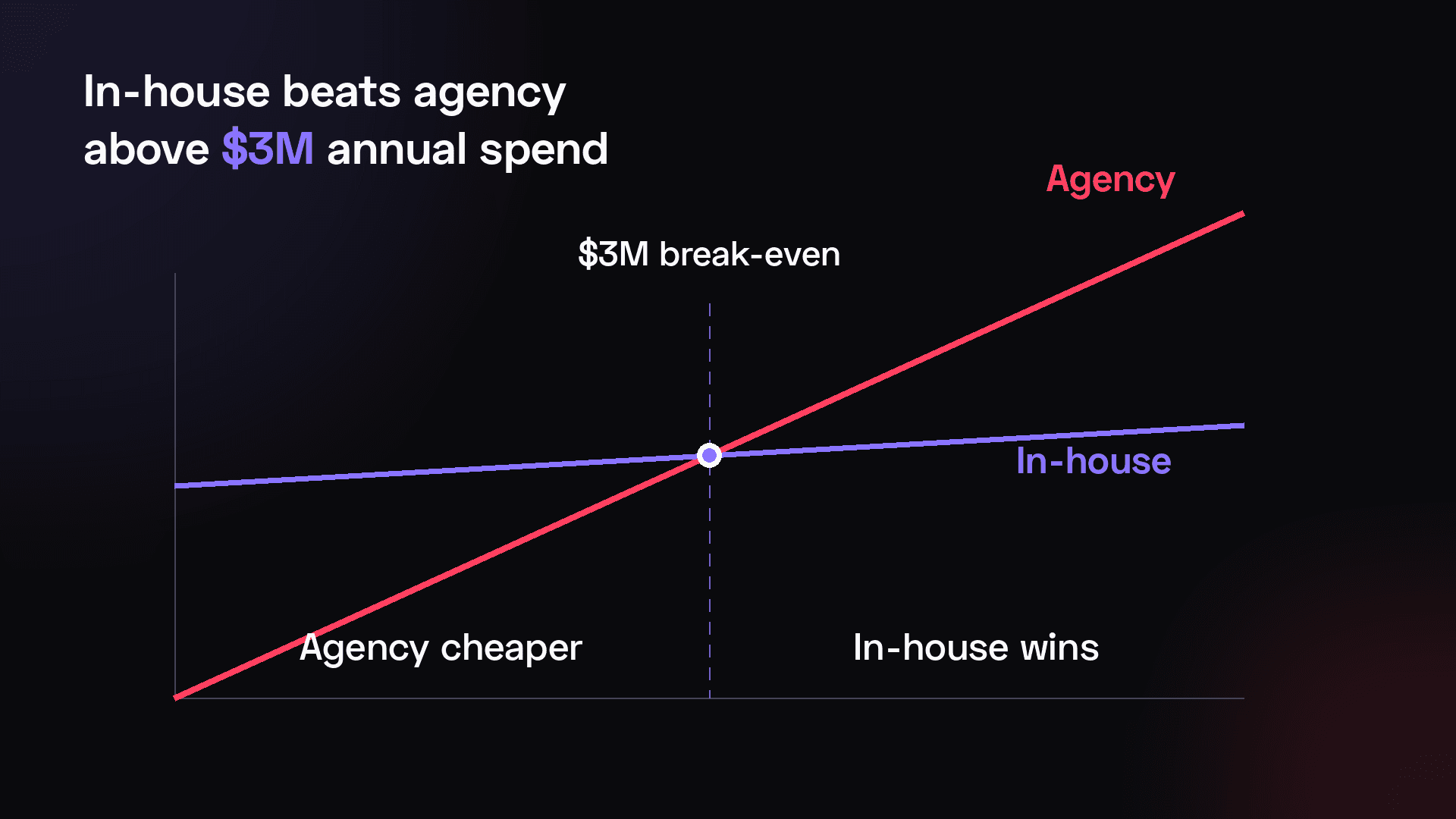
In house compliance becomes breakeven at $3M+ annual spend. Agencies charge 15-25% premium on budget for compliance management (retainer or hidden in fees). In house: hire one compliance person at $80-120K annually plus tools. Below $3M spend, agency management is cheaper. At $3M+, in house infrastructure breakeven is attractive.
For agency selection, most quote cost per lead and ROAS. Those metrics become less relevant if the account suspends. The real comparison is documented compliance track record. Ask:
- How many account suspensions have you caused in 12 months? (Honesty here separates scale operators from luck.)
- What's your documented appeal success rate and resolution timeline? (85-90% for properly documented appeals, under 48 hours since the November 2025 Google appeal framework. Generic appeals succeed at 30%.)
- What's your MCC structure for financial services clients? (Separate MCCs by risk tier or high-risk isolation.)
- How many policy updates did you react to in 90 days? (Google published 35 in 2025. Agency should name 5-7.)
- How often do you audit financial services accounts for policy drift? (Quarterly minimum, 30-day cycles preferred for financial services given velocity.)
These separate agencies that built compliance infrastructure from agencies that got lucky.
What This Means for 2026 Planning
The cost structure of financial advertising is changing. For five years, compliance was a feature. "We have a compliance process." For 2026, compliance is structural infrastructure that rivals media buying cost.
Approval time increased from 1-2 weeks to 2-4 weeks. Account level risk increased. Policy update velocity increased. Verification is no longer one time.
Teams that treat compliance as infrastructure built-in (review before creative is written, verification maintained continuously, policy updates tracked automatically, MCC structure isolates risk) will spend less and suffer fewer suspensions. Teams treating compliance as post campaign checklist will spend more in agency retainers, face longer delays, and experience more suspensions.
The 24.9 million suspended accounts are competing for budget, getting suspended, waiting for appeals, starting over. The operators who are scaling profitably know compliance is now a structural decision, not a tactical one. Budget architecture, account structure, agency relationships, and internal process all reflect that. It costs more upfront. It saves enormous amounts when your account doesn't suspend.
Frequently Asked Questions
Related reading
- What actually triggers financial services ad disapprovals, across 273M restricted ads.
- The June 2026 EU financial verification deadline.
- Launching paid media in new regulated regions.
- The proof case: an 84% CPA reduction and the infrastructure behind it.

Kuba Strugarek
CEO & Co-founder of Oligamy Marketing, also a CMO for Oligamy Software activities. Built offline conversion tracking that delivered 536% YoY growth in Latin America. Performance Marketing on regulated markets.